
Case Study #2
Proposing Multi-Disease Genomic Index Model for Polygenic Risk Assessment
In this case study, researchers investigated whether implementing a Genomic Index (a scoring system that combines multiple polygenic risk predictors) model could effectively reduce the relative risk of several diseases simultaneously when selecting between siblings. Furthermore, to determine:
- If PGT-P could reduce risks for diseases like diabetes, cancer, and cancer simultaneously.
- Whether this technology can be applied to a general population, even if there is no known family history of polygenic disease.
Study Design
The authors reached their conclusion through three studies.
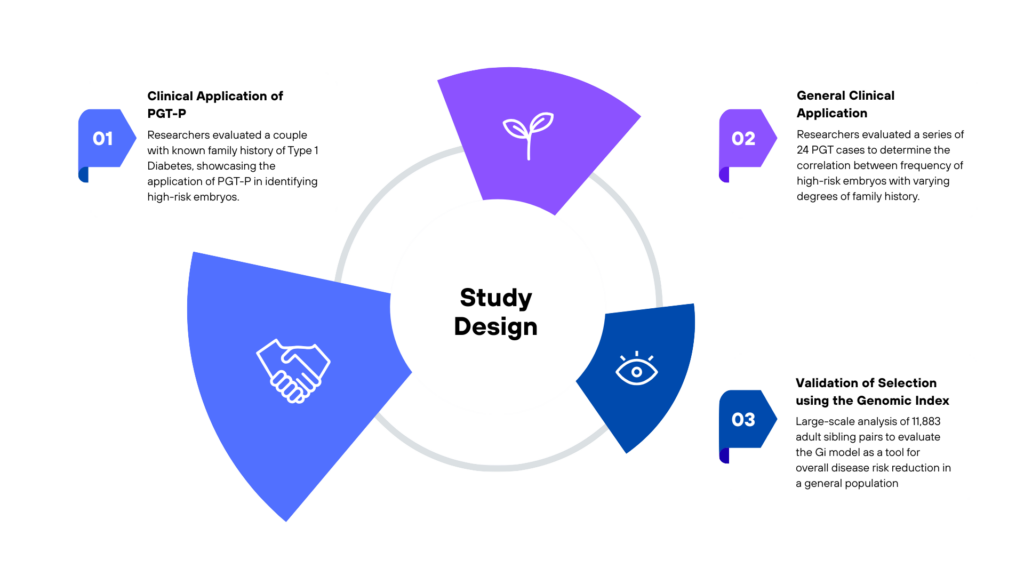
Study 1
The first study features a couple with known family history of Type 1 Diabetes (T1D). Their first-born was diagnosed with T1D.
This study showcases a scenario of PGT-P where parents have a known high risk (top 2% of the population risk) of passing one specific condition to their offspring. This lays as a basis for the upcoming two studies.
Study 2
This study demonstrates bridging the gap between families of known history and the general population. They explored how the frequency of high-risk embryos correlates with varying degrees of family history.
Researchers analyzed 24 PGT cases (a total of 181 embryos). Couples ranged from having unknown family history to having first-degree relative affected by polygenic disease. To analyze the specific risk of each embryo, the researchers did the following:
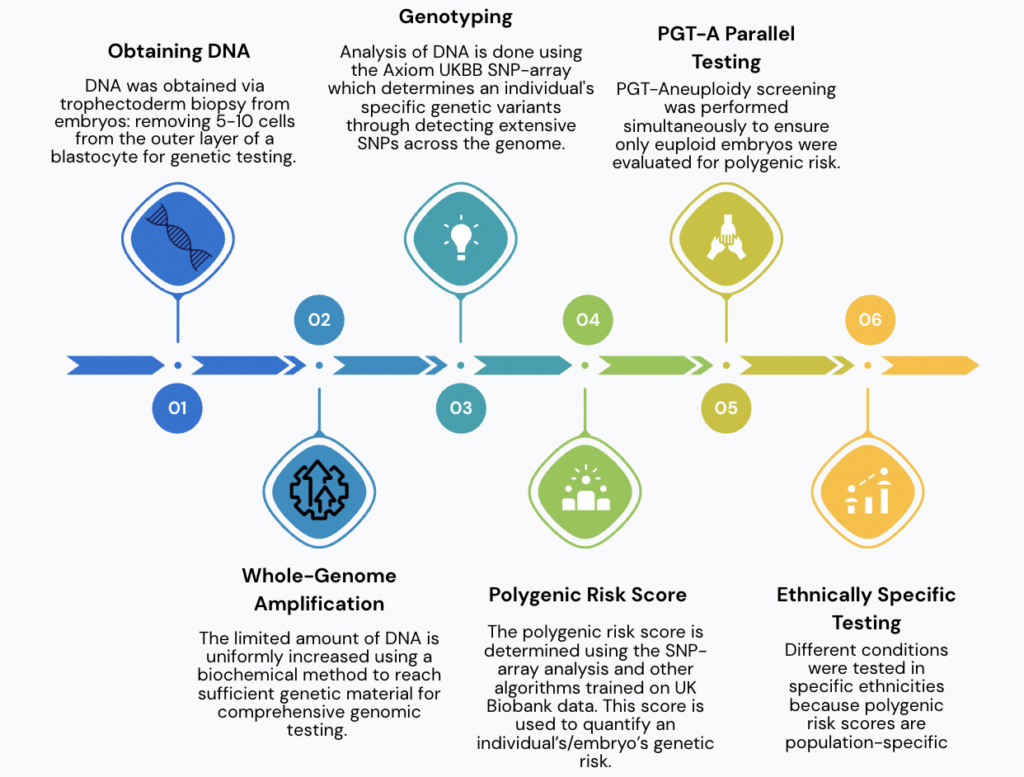
Word Bank:
- SNP-array: a high-density genomic tool to capture genetic information across the whole genome, with the primary function of detecting SNPs.
- Axiom UKBB: it is specially engineered to capture the genetic data from the UK Biobank.
- PGT-A (Preimplantation Genetic Testing for Aneuploidy): a type of PGT that identifies abnormal chromosome numbers
Findings of this study include:
- Embryos with a first-degree affected relative (including parents or siblings) have a significantly higher average genomic risk index compared to those with distant relatives or unknown histories.
- Even if parents reported “no known family history”, 6% of embryos were still identified as “high-risk”
The researchers concluded that even though family history can be an important indicator for predicting polygenic risks, it should not be relied upon, suggesting that a further indicator, such as PGT-P should be included in screening for high-risk embryos.
Study 3
Since the previous study suggested that PGT-P can be utilized in analyzing families of unknown polygenic history, the researchers wanted to prove that PGT-P provides clinical utility to the general population. In addition, they wanted to investigate whether avoiding one disease would trigger a negative feed back loop where the risk of another condition is increased.
They performed the third study, where they selected 11,883 same-sex caucasian adult sibling pairs from the UK Biobank to prove that genetic selection can reduce the risk of multiple diseases simultaneously. They used a Genomic Index Model derived from genomic data and machine learning to carry out this investigation.
- They measured for the risks of 11 diseases/conditions: T1D, T2D, breast, prostate, and testicular cancer, malignant melanoma, basal cell carcinoma, heart attack, coronary artery disease, hypercholesterolemia, and hypertension.
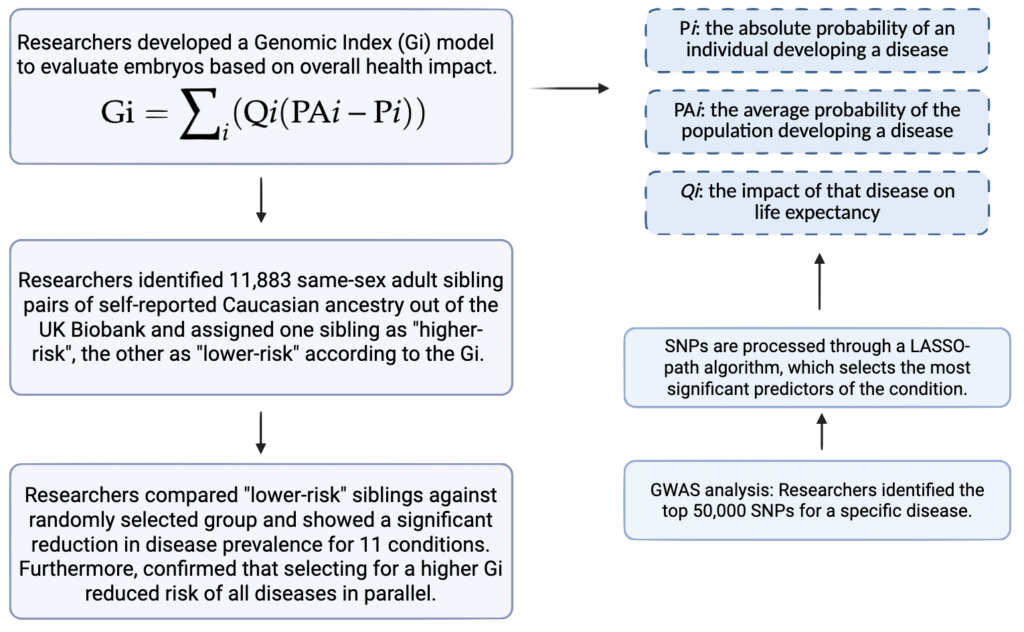
The results of this study revealed:
- Measurable Relative Risk Reduction in all 11 diseases tested, with the most prominent ones being:
- Heart Attack: 46.9% reduction
- Type 2 Diabetes: 42.3% reduction
- Coronary Artery Disease: 39.7% reduction
- Type 1 Diabetes: 33% reduction
- Avoiding high risk of one disease did not lead to the increase of risk of another. The genomic index allowed for parallel reduction of risk across various conditions.
Main Conclusion
The incorporation of the Genomic Index model with PGT-P is a statistically valid and clinically effective tool for reducing the relative risk of multiple diseases simultaneously. While traditional PGT-P has been applied to reduce the risk of one specific condition, this Gi offers a choice of examining 11 different diseases at once.